
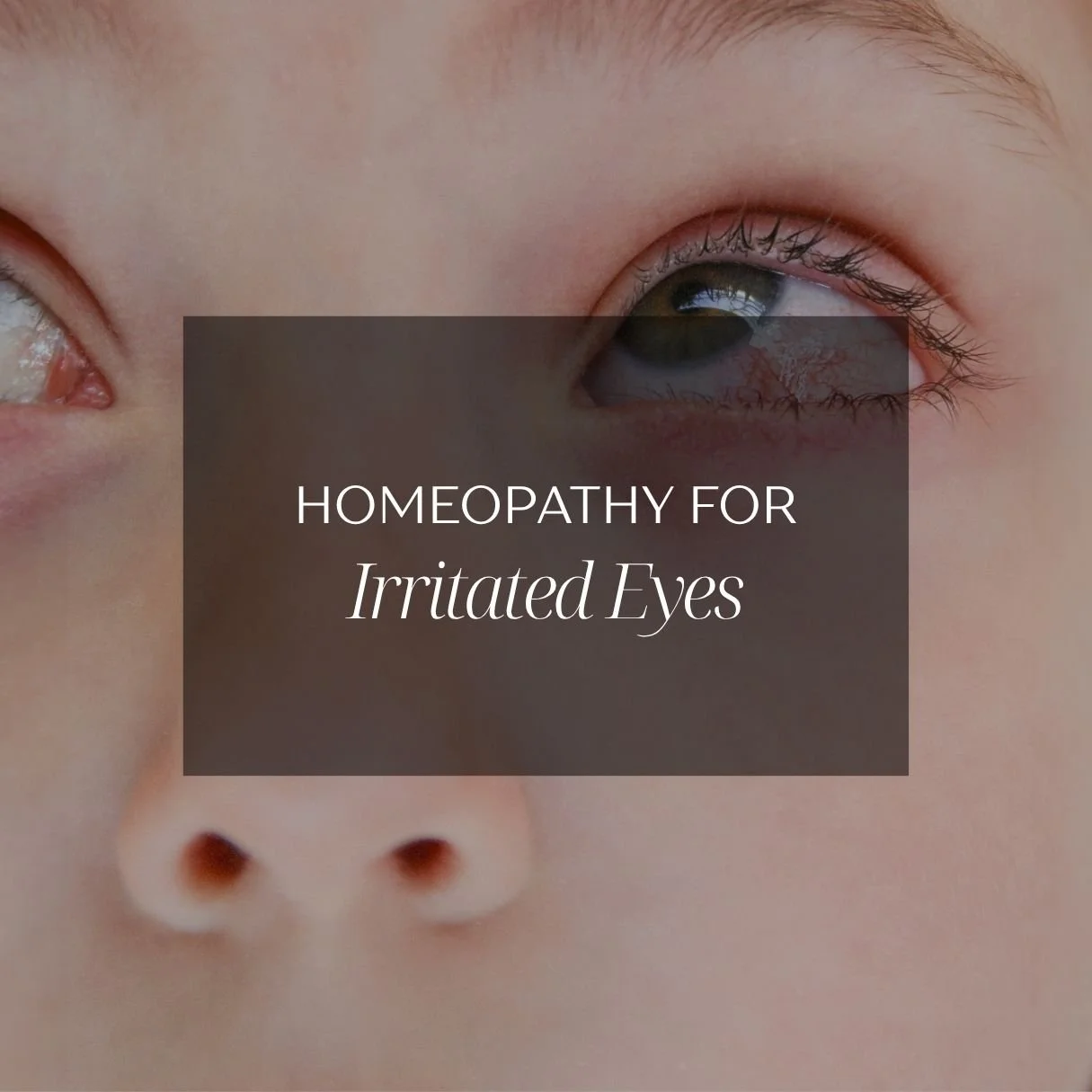
Red, irritated eyes and eyelid discomfort are common and can have a variety of causes. These may include environmental irritants, allergies, dry eyes and infections such as conjunctivitis. Eyelid conditions such as styes, blepharitis and chalazia can also cause localised swelling, redness, irritation or tenderness. Understanding the possible cause is important, as different eye conditions may require different forms of assessment and care.
Seeking Further Advice
Red or irritated eyes should be appropriately assessed by your medical professional, particularly in the following situations:
significant eye pain or changes to vision
marked sensitivity to light
significant swelling around the eye
an eye injury or possible foreign body
severe, persistent, recurrent or worsening symptoms.
contact lens wearers who develop a painful or significantly red eyes.
Understanding the Homeopathic Approach
Homeopathy has a long tradition of individualised remedy selection. Rather than considering a diagnosis alone, homeopathic practitioners traditionally study the individual's overall symptom picture and may ask you questions such as:
Whether one or both eyes are affected
The appearance of the eyes, including redness, swelling or puffiness
The nature of any discharge, including its colour and consistency
Whether there is itching, burning, stinging or soreness
Whether watering or discharge is irritating to the surrounding skin
Whether light, warmth, cold or fresh air influences the symptoms
Any other associated symptoms
These characteristics form part of the traditional homeopathic assessment process and are considered alongside the individual's broader circumstances.
Exploring Traditional Homeopathic Materia Medica
Homeopathic materia medica contains detailed descriptions of individual medicines, including their historical uses and characteristic symptom pictures. The following are some examples:
Argentum nitricum
Sticky, purulent discharges and agglutination
Redness
Sand or grit-like sensation
Sensitivity to light may be noted.
Euphrasia
Watery eyes with burning or irritating tears.
Frequent blinking and sensitivity to light.
Redness in and around the eyes.
Apis mellifica
Puffy and swollen eyes and eyelids.
Cool applications may feel more comfortable.
Belladonna
Sudden sensations of heat and redness around the eyes.
Throbbing sensations.
Sensitivity to light.
Pulsatilla
Non-irritating, thick, yellowish discharge.
Sticky sensations around the eyelids, particularly after sleeping.
Symptoms may feel more comfortable in fresh air.
Patient may be clingy, teary and need regular comforting.
Staphysagria
Sensitivity, minor bumps or irritation around the eyes and eyelids
Itching, burning or soreness.
Recurrent patterns of eyelid irritation are also described in traditional homeopathic materia medica.
Why Individual Assessment Matters
People experiencing similar symptoms can have quite different experiences. Understanding the nature of the symptoms and the individual's broader health history is important when considering an appropriate approach.
A homeopathic consultation provides an opportunity to discuss these details and explore the traditional homeopathic approach to individual remedy selection.
Homeopathic Consultations
If you would like to learn more about homeopathy or discuss an individualised approach, consultations are available online Australia-wide.
Please note: The information provided in this article is for educational purposes only and should not be considered a substitute for advice, diagnosis or treatment provided by your doctor or other qualified healthcare practitioner.